
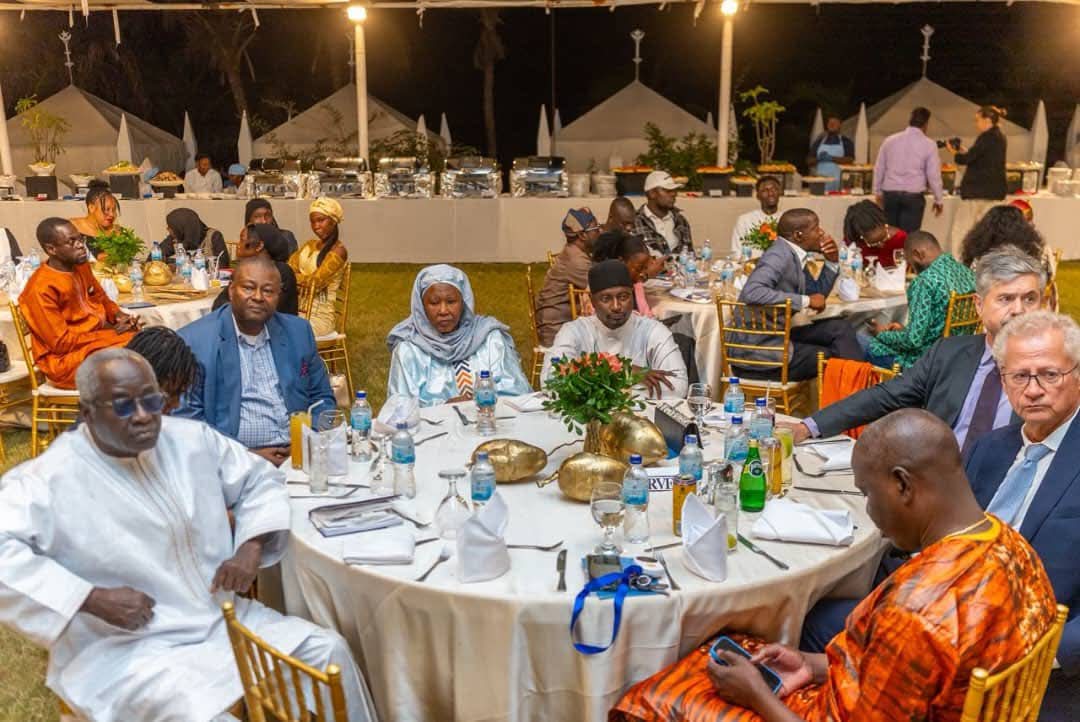
Eighteen of The Gambia’s 22 registered political parties have signed a landmark communiqué committing to reforms aimed at increasing women’s participation and representation in politics.
The agreement followed a two-day National Conference on Women’s Political Participation and Representation, held from 15–16 December at the Sir Dawda Kairaba Jawara International Conference Centre in Banjul.
The conference was convened by the International Institute for Democracy and Electoral Assistance (International IDEA) through an EU-funded project, in partnership with the National Assembly, the National Human Rights Commission, the Gambia Press Union and the CSO Gender Platform.
Participants acknowledged that despite democratic progress in recent years, women remain significantly underrepresented in political decision-making.
Women currently hold just 8.6% of seats in the National Assembly and 14.2% of cabinet positions, despite making up more than half of the population and the majority of registered voters.
Delegates identified several barriers to women’s political participation, including entrenched patriarchal norms, high campaign costs, the absence of enforceable gender quotas, political violence and harassment, gender-biased media coverage and weak support within political parties.
Under the communiqué, stakeholders agreed to push for gender-sensitive electoral reforms, including lower nomination fees, the introduction of gender quotas and measures to protect women candidates from political violence.
Political parties also committed to adopting a minimum 30% gender quota in leadership and candidate selection processes.
The communiqué was formally adopted by representatives of political parties, civil society organisations, youth and women’s groups and national institutions.
Final adoption was moved by former Vice-President Fatoumatta Jallow Tambajang and seconded by the chairman of the Independent Electoral Commission, Joseph Colley.
The conference ended with a call on the government, political parties and the wider public to turn the commitments into concrete action ahead of the country’s next electoral cycle.



I am genuinely pleased to glance at this blog posts which consists of
tons of valuable information, thanks for providing these information.
Very good blog! Do you have any suggestions for aspiring
writers? I’m planning to start my own site soon but I’m a little lost
on everything. Would you recommend starting with a free platform like WordPress or go for a paid option? There are so many
options out there that I’m completely overwhelmed ..
Any suggestions? Thanks a lot!
What’s up mates, pleasant piece of writing and nice urging commented here,
I am truly enjoying by these.
I like the helpful information you provide in your articles.
I will bookmark your weblog and check again here frequently.
I am quite certain I’ll learn a lot of new stuff right here!
Best of luck for the next!
Nhà cái Az88
Needed a new casino login, and daybetcasinologin came through. Secure and easy to use, which is exactly what I wanted. Check them out here: daybetcasinologin.
uu88
Estrelabet2, alright! Always on the lookout for new places to try my hand. Wish me luck, lads! estrelabet2
peso99 https://www.repeso99.net