President Adama Barrow’s nationwide Development Tour and the emergence of Mayor Talib Ahmed Bensouda as the flag bearer of Coalition 2026 have placed two different political messages before Gambians as the country moves towards the December presidential election.
While President Barrow has been travelling across the country to inaugurate roads, launch new infrastructure projects, visit agricultural schemes and hand over ambulances, Mayor Bensouda has been presenting his coalition as an alternative focused on the cost of living, employment, healthcare, governance and institutional reform.
The contrast emerged strongly during Bensouda’s appearance on West Coast Radio’s Coffee Time with Peter Gomez, where he discussed his mandate as the newly selected flag bearer of Coalition 2026.
President Barrow began his Development Tour on Saturday, August 8, under the Connect Gambia infrastructure programme aĺso called Development Tour, the same day Bensouda was declared the candidate for the opposition coalition under the Coalition Mediation Committee (CMC).
In the North Bank Region, President Barrow laid foundation stones for several road projects, including roads linking Essau and Barra, Fass Njaga Choi, Bakalarr, Jurunku, Kerr Samba Kalla and Kerr Cherno Omar. The projects cover about 255 kilometres.
The President also handed over ambulances to communities in the Niumi and Jokadu areas. On Sunday, August 9, he inaugurated the Bani-Salikeni-Njaba Kunda road, reported by The Point to be about 17 kilometres long.
He also laid foundation stones for additional road projects around Kerewan, Daru Rilwan and Tankonjala. Voice Out Digital reported that the wider North Bank road programme could cover more than 350 kilometres. The tour continued into Monday, August 10, with activities in the North Bank and Central River regions.
President Barrow laid the foundation stone for the 52-kilometre Ngayen Sanjal Road and inaugurated the 12-kilometre Njau Loop Road. He also laid foundation stones at Yallal Tankon Kunda and Farafenni for additional road projects covering 52.1 kilometres.
At a meeting in Njau, President Barrow also addressed the issue of subsidised fertiliser. According to Foroyaa report on Tuesday, the President warned traders and individuals against increasing the price of subsidised fertiliser or taking it out of the country.
The President said the government bought the fertiliser for more than D3,000 per bag but sells it to farmers for D1,100. Barrow said the government had procured more than 300,000 bags of chemical fertiliser and called on governors, chiefs, police officers and community leaders to report anyone involved in hoarding, reselling or smuggling the commodity.
On Tuesday, August 11, the President continued his tour in the Central River Region, where he inaugurated the Karantaba-Fitu Fulla road, covering about 26 kilometres, according to reports in the media.
He also visited a 50-hectare rice field at Madina Wassu as part of the government’s focus on agriculture and food production.
The tour is expected to continue towards the Upper River Region, with the National People’s Party’s published programme listing Basse and Garawol among locations for upcoming Connect Gambia infrastructure activities on August 13.
But as the President travels from one community to another, Coalition 2026 is attempting to frame the election debate around a different set of priorities.
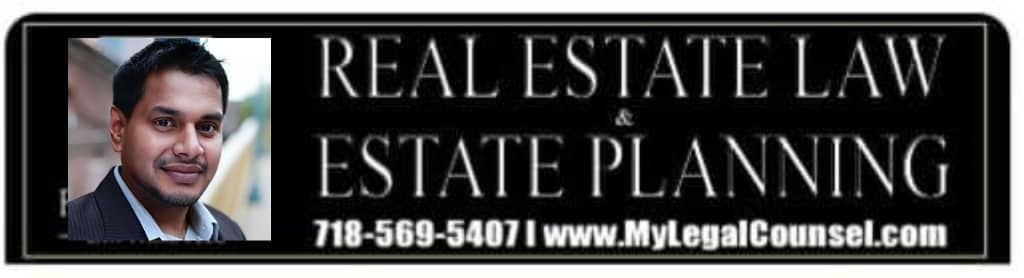
Mayor Bensouda, who was recently selected as the flag bearer of Coalition 2026, said the coalition’s mandate goes beyond defeating President Barrow at the polls.
“Coalition 2026 has come up with a candidate which is myself,” he said.
“The mandate specifically is to complete the promise of reforms that Gambia set out to achieve in 2016.”
He said another central objective was to unite Gambians who oppose the current political status quo.
“Gambia has been long divided for the past decade or even longer and this is an attempt to try to bring Gambians, especially those who oppose the status quo, together under a single mandate to achieve the reforms and the prosperity we set out to achieve in 2016,” he said.
Bensouda said the coalition would have to put aside individual party interests in favour of what he called a Gambian agenda.
“We have to let go of our party agendas and look at a larger project of a Gambian agenda,” he said.
He said his political platform, Unite Party, joined the coalition after about a month of discussions.
“I always say we join a coalition to govern, not a coalition to win.”
Bensouda said his political priorities included the cost of living, corruption and crimes.
“We want this country to change drastically from cost of living to fighting corruption to crime. We want Gambia to prosper,” he said.
Asked about the leadership structure of Coalition 2026, Bensouda said he was effectively the leader but would not have absolute authority over the coalition.
“I am effectively the leader of Coalition 2026,” he said.
He explained that the coalition council consisted of the political platforms that had come together to share resources and pursue a common objective.
“The council is the leaders of the different and various political platforms,” he said.
Bensouda said disagreements would be resolved through democratic decision-making.
“If we sit as a council at this point what we are discussing would be either the campaign structure or the manifesto we want to promote, then the majority takes the vote,” he said.
He compared the arrangement to the relationship between a president and parliament.
“So even as president if you wanted it a certain way you have to accept that the parliament is the majority,” he said.
The Coalition 2026 flag bearer also said parties and political actors that withdrew from the coalition could still return.
“The coalition is an ongoing project,” he said.
“We see it as a living, breathing document. We see it as a platform that seeks to continuously reunify and unite.”
Bensouda said those who left did so because of disagreements with the direction of the coalition rather than because of him personally.
“We will continue our engagement. We will continue to see how to reconcile differences because, like I said, this is about a greater project which is the prosperity of The Gambia,” he said.
Asked specifically whether the UDP could return, Bensouda said the coalition was open to dialogue.
“What we are certainly open to is dialogue,” he said.
“So we would always be open to dialogue with anybody and based on how that dialogue goes there can be a breakthrough or not.”
He stressed that although he was the coalition’s flag bearer, he could not make decisions without consulting the coalition council.
“We have to consult the council. We have to work with the council,” he said.
Bensouda also clarified the coalition’s position on a five-year transitional government. Asked whether this meant he would serve only one five-year term if elected, he said: “No, it doesn’t mean that.”
He said the five-year period referred to the coalition’s contractual period for implementing reforms.
“That contractual period can be extended. It can be amended but certainly what we all subscribe to [is] that no president should serve more than two terms,” he said.
Among the proposed reforms, Bensouda listed constitutional reform, changes to the Public Order Act and a two-term presidential limit.
“One of the key objectives of the coalition is to bring about a new constitution,” he said.
He also placed youth employment at the centre of the coalition’s programme.
“One commitment is that within the first year of the coalition there must be a detailed plan as to how to create 10,000 new jobs within the first year of the coalition,” he said.
He also cited economic growth, reduction of government expenditure and fighting corruption.
“One of the commitments is to reduce the fleet of government and, of course, the perks attached to the office of the president and the ministries,” he said.
“And, of course, fighting corruption is a huge objective of the coalition. There can be no progress with rampant corruption as we see today.”
Bensouda said a government under his leadership would review the benefits attached to senior public offices.
He said the salary of the president was around D600,000, although he said he would need to confirm the exact figure and whether it was taxed.
“Everybody should pay taxes, especially the president,” he said.
He argued that presidential compensation should be considered in relation to the size of the Gambian economy and government budget.
“Six hundred thousand actually is a lot compared to the Gambia budget,” he said.
He also criticised the size of the presidential vehicle fleet.
“The fleet of vehicles. We think it’s obscene. It’s expensive,” he said.
“The president lives like a king.”
Bensouda said his approach would be based on the concept of the president as a public servant.
“You’re not a king. You’re not anybody’s master. The people are your master,” he said.
The coalition leader also criticised government expenditure on ministerial travel.
“There’s rampant travelling happening all over the place. Obscene amount of money,” he said.
He questioned the continued use of allowances and what he described as a lack of proper controls over travel expenditure.
“One thing I’ve always advocated for is pay-as-you-go expenses with caps,” he said.
Bensouda proposed the use of government credit cards for official travel expenses.
“You can charge expenses to those credit cards or you can pay out of pocket, bring your receipt and claim it back,” he said.
“This is standard practice around the world that would cut government’s expenditure by huge, huge, huge margins.”
Bensouda said he supported better salaries and improved conditions for civil servants but drew a distinction between civil servants and political office holders.
“I support the upliftment of civil servants. I support increasing salaries of civil servants,” he said.
He said civil servants should have better access to housing, credit, vehicles and professional development.
But he said ministers and the president should not benefit in the same way.
“Public servants we volunteer to help our country and that is ministers and the president. So the country should benefit from us. We should not be benefiting from the country,” he said.
He also said salary increases should be accompanied by access to housing, financing, healthcare and education support.
Bensouda said Coalition 2026 would also use a system of proportional representation in the event that it forms a government.
He said positions would not simply be distributed according to which party contributed the most politically.
“What would be prioritised is the competency and capacity of those candidates versus the parties they come from,” he said.
He said the coalition’s partners would have to trust the president to put the national interest above party interests.
“It should not just be about political expediency or sharing positions. It should be first about serving the Gambian people to the best of our ability,” he said.
It was on President Barrow’s Development Tour that Bensouda’s criticism became particularly direct.
He acknowledged that roads were important but argued that infrastructure alone could not define development.
“Quality of life, prosperity is not just about physical infrastructure projects,” he said.
“In a developed country or in a country that is prosperous, when a government brags they talk about health care and the quality of health care. When a government boasts they talk about job numbers, they talk about inflation, they talk about the pay of people and the ability of people to have a good life.”
Bensouda said The Gambia continued to face serious challenges in poverty, unemployment and healthcare.
“If you look at Gambia right now and you look at the rates of poverty, the rates of unemployment, the quality of health care and life, it’s one of the poorest in the world,” he said.
He also questioned the government’s emphasis on roads during the current Development Tour.
“I wish President Barrow would do those types of tours. Cost of living tours. Tours about employment. Economic upliftment and women empowerment,” he said.
“But all of President Barrow’s tours are simple tours about projects. Light projects. About road projects. About a ferry project, etc.”
Bensouda described infrastructure projects as “the low-hanging fruit”.
“This is the easiest thing any president can do,” he said.
“Anybody you handpick on Gambian streets can get into office, tell their Minister of Finance, go get loans and do infrastructure projects.”
Bensouda said roads remained important but should be balanced against other needs.
“I wouldn’t say it’s our fault. Anybody would like a new road run across their home, especially if they spent decades without a new road,” he said.
“Roads are certainly part of development. I wouldn’t downplay that it’s part of development. But it’s not the most critical part of development.”
He said his criticism was not that the government should stop building roads.
“By all means, he should,” he said.
But he called for infrastructure projects to be built responsibly and without inflated costs.
“What we are saying is the more important things are employment, cost of living. The more important things are health care and education,” he said.
According to Bensouda, the issues that people feel most directly are related to household finances, employment, health and security.
“The things people feel on a daily basis is their health,” he said.
“The things people feel on a daily basis is putting food on the table. The lack of employment their relatives have. The backway journey their relatives are going to. The insecurity in their neighbourhood.”
He said the coalition’s own internal surveys suggested that affordability and employment were among the leading concerns of Gambians, followed by crime and electricity.
One response from a focus group, he said, was: “We don’t eat roads.”
The contrasting messages now form part of an increasingly active political landscape ahead of December. President Barrow’s Development Tour is presenting roads, agriculture, health facilities and other infrastructure projects as evidence of government activity across the regions. Coalition 2026, meanwhile, is presenting its flag bearer as the face of a programme centred on institutional reform, economic change, employment, accountability and a reduction in the cost of running government.
Bensouda said the coalition’s ambition was to move beyond the political objective that brought opposition parties together in 2016.
“Gambia was removed out of authoritarianism and dictatorship in 2016 but now the next project is removing Gambia out of decay and inefficiencies and poor governance and into an era of prosperity and equity and equality,” he said.
With the coalition still leaving its doors open to parties that have withdrawn, and President Barrow continuing his nationwide tour, both political camps are now taking their messages directly to voters across the country.
You need to login to view and post FB Comments!