
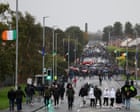
Protestant march taking place in an area that historically has been a flashpoint of sectarian disputes
The Orange Order, one of the most prominent organisations within unionism, insisted that the Garvaghy Road is part of its traditional marching route but the event is opposed by many Catholic residents who live there.
The parade was last permitted down Garvaghy Road in 1998 after a wave of violence followed clashes on the street, with thousands of public order incidents across Northern Ireland including murders.
A ruling by the Parades Commission permitting the Orange Order to march on Garvaghy Road was upheld at around 2.15am after an appeals court overturned a ruling by the High Court on Saturday to allow the procession, despite fears it could spark fresh sectarian violence.
The controversial loyalist march down a mainly Catholic Road in Northern Ireland, banned for almost 30 years because of violence, has begun after an appeals court ruled in the small hours of Sunday morning it was legal.
Protestors braved heavy rain in Portadown on Sunday morning as they gathered at the scene of the contentious Drumcree parade, which starts at Drumcree church and proceeds through the town including the mainly nationalist Garvaghy Road.
The crowds, many of them wearing balaclavas, clustered in large groups along Garvaghy Road in the hours leading up to the start of the parade at 8am.
First minister Michelle O’Neill said the original decision to allow the march was “primitive stuff in the year 2026” while unionists said Catholics had “nothing to fear”.