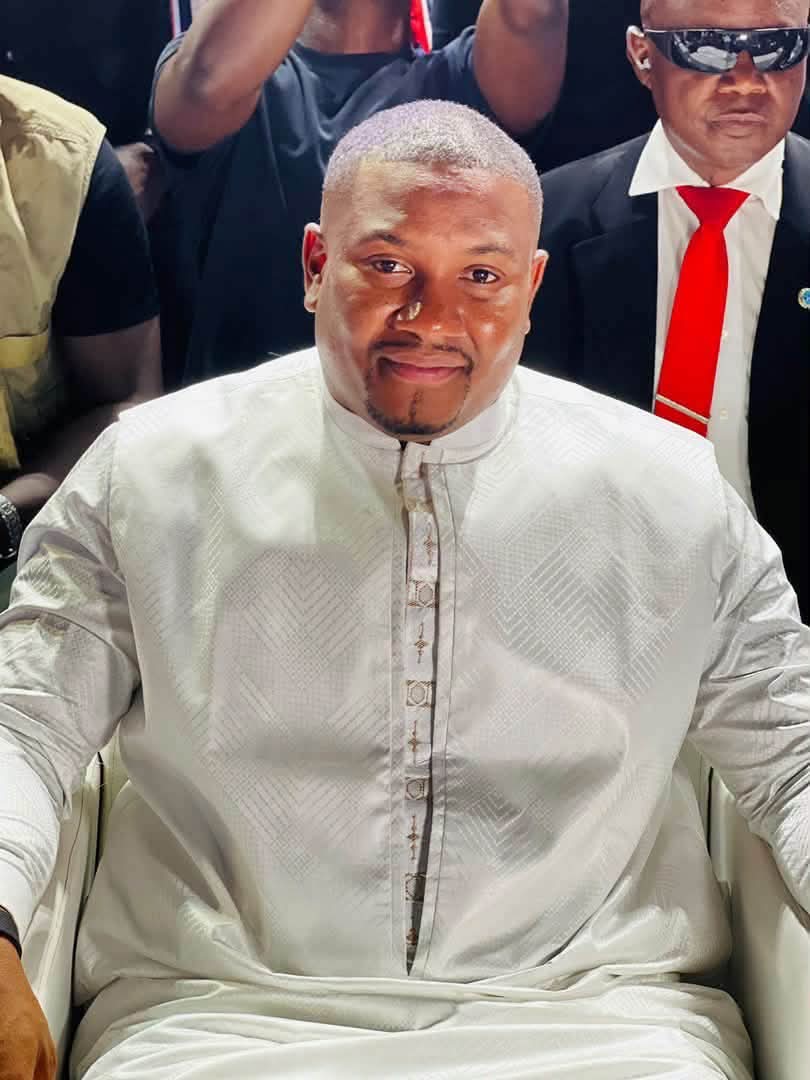
Brikama, September 6, 2026 — Presidential aspirant Talib Ahmed Bensouda used the Coalition 2026 Unity Rally at the Brikama SSP grounds on Sunday to outline his vision for a transformed Gambia, touching on governance, democratic reforms, electricity, security, tribalism and presidential accountability.
Addressing a large gathering of supporters and members of the public, Bensouda maintained that his ambition to contest the 2026 presidential election remains firm. He rejected suggestions that recent developments surrounding the Local Government Commission could prevent him from pursuing his political ambitions, insisting that nothing would stop his candidacy.
A central part of his speech was his call for stronger constitutional safeguards against excessive concentration of presidential power. Bensouda pledged to support constitutional reforms introducing a strict two-term limit for presidents, arguing that leadership should be subject to clear democratic limits and institutional checks.
He also spoke extensively about the country’s electricity and water challenges. On the future of the National Water and Electricity Company (NAWEC), Bensouda proposed greater private-sector participation, including privatization, as part of an effort to improve efficiency, investment and service delivery.
On democratic freedoms, he criticized restrictions surrounding public gatherings and protests. He argued that the role of the police should primarily be to provide security during lawful demonstrations and rallies rather than determine who should be allowed to exercise their constitutional freedoms.
Bensouda further promised reforms aimed at strengthening the independence of key national institutions, including the Independent Electoral Commission, the National Audit Office and the Central Bank. According to him, strong and independent institutions are essential to ensuring accountability and preventing political interference.
The issue of tribalism also featured prominently in his address. Bensouda pledged to introduce legislation targeting tribal discrimination, incitement and practices that threaten national cohesion. He presented the fight against tribalism as part of a broader commitment to building a Gambia where citizens are treated equally regardless of their ethnic background.
On security and justice, Bensouda took a firm position on the death penalty, expressing support for its application in cases involving individuals convicted of deliberately taking another person’s life.
He also addressed the presence of the regional ECOMIG security mission, promising that, if elected, his administration would seek to end the mission within 12 months while strengthening The Gambia’s own security capacity.
The SSP rally therefore served not only as a political gathering but also as an opportunity for Bensouda to present a broad policy direction ahead of the 2026 presidential election.
His proposals are likely to generate significant public debate, particularly his position on NAWEC privatization, the death penalty, ECOMIG and constitutional reform. Whether these proposals can be implemented within the country’s legal, institutional and financial realities will ultimately depend on the details of the policies and the political mandate behind them.
With the 2026 election approaching, Bensouda’s SSP address marks another step in the emerging political contest and gives voters a clearer picture of the type of governance and institutional reforms he says he would pursue if entrusted with the presidency.