
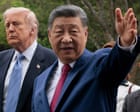
Ever the strategist, the Chinese leader is taking the offensive, both abroad and at home. That’s bad news for global order, and minorities in his country
Imagine what would happen if a British prime minister in London told the Scots they could not have their own parliament, national football team or fly the saltire. Or if the Welsh were told their language and poetry were banned and must no longer be taught in schools. The ensuing uproar would probably destroy the United Kingdom. Yet that’s exactly what Xi Jinping, China’s communist emperor, is telling the roughly 125 million members of the 55 ethnic and religious minorities who together comprise about 9% of the country’s (majority Han Chinese) population.
Xi claims his sinicisation policy, embodied in a new “ethnic unity” law, will boost national identity and integration and, by expanding compulsory use of the Mandarin language, improve life and work prospects. Minorities should “hug tightly like pomegranate seeds” to build a strong, united China, he says. But Tibetans, Mongolians, Uyghurs and others who value their separate language and customs fiercely object to what they see as forced assimilation into a conformist, intolerant monoculture dominated by the Communist party’s tunnel vision. For them, it’s ethnic cleansing by another name.
Simon Tisdall is a Guardian foreign affairs commentator



