By Yankuba Jallow
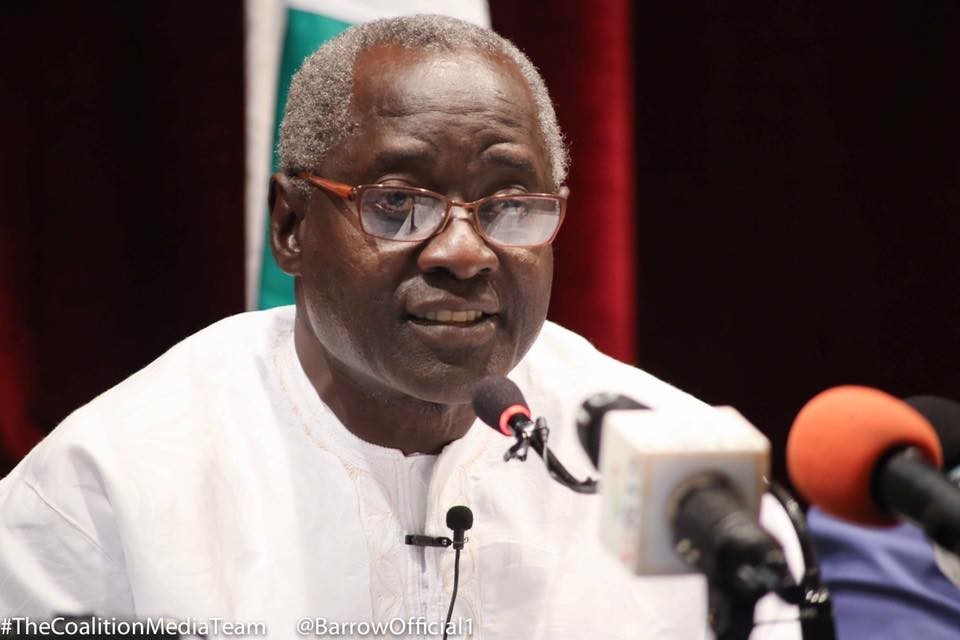
Hon. Sallah
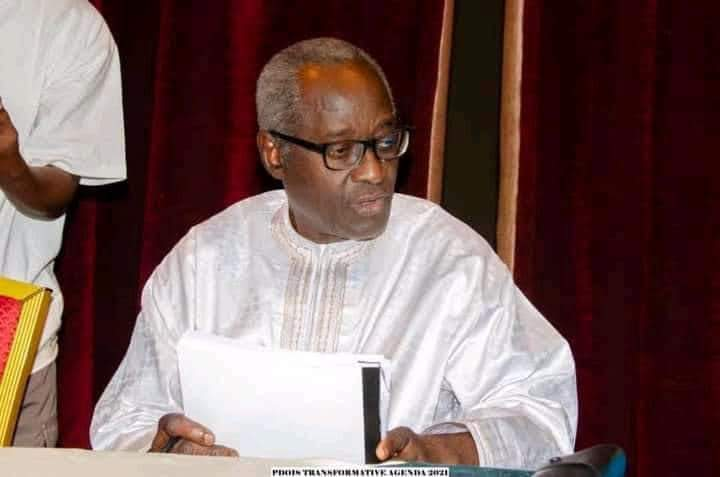
Former People’s Democratic Organisation for Independence and Socialism (PDOIS) Secretary General and founding member Halifa Sallah has said the party’s political philosophy remains centred on knowledge, national ownership of resources and policies aimed at ensuring development reaches every Gambian community.
Delivering the final part of his lecture marking PDOIS’s 40th anniversary at Eye Africa TV on Friday, 31 July, Sallah defended the party’s long-held positions on governance, economic development, education and social welfare, saying they were based on the realities facing The Gambia rather than political slogans.
Addressing discussions about the party’s socialist orientation, Sallah said many people misunderstood the meaning of socialism and capitalism.
“People have spoken about PDOIS embracing socialism and say that this has been an obstacle to its development,” he said.
“Some talk about socialist ideology and capitalist ideology.”
“Let me put that into perspective.”
Sallah argued that socialism and capitalism were economic systems rather than ideologies.
“We must study.”
“We must learn.”
“Socialism is not an ideology.”
“Capitalism is not an ideology.”
“Ideology is a body of ideas that becomes a set of principles you choose to follow.”
He said wealth determined whether someone could be described as a capitalist.
“A poor person can be religious.”
“A rich person can also be religious.”
“But can a poor person become a capitalist simply by choice?”
“If someone says, ‘I am a capitalist,’ that is only a dream unless that person has capital.”
Sallah questioned the growing emphasis on entrepreneurship without providing citizens with the resources to establish businesses.
“Today many young people graduate from school calling themselves entrepreneurs.”
“Entrepreneurs without capital.”
“When will they become entrepreneurs?”
“We are misleading people.”
“We are making them build illusions.”
“We are not giving them a productive base.”
He said every country’s policies should reflect its own economic realities.
“Capitalist systems exist.”
“Socialist systems exist.”
“They exist because the material conditions for them exist.”
“But here is The Gambia.”
“Even if The Gambia wanted to become a capitalist nation, where are the industries?”
“Who is investing in them?”
Sallah said policies should address the country’s circumstances instead of copying models from elsewhere.
“You cannot simply give all the land to a few people for large-scale farming.”
“What happens to everybody else?”
“If they are displaced, where will they go?”
“These are practical questions.”
“We had to find practical answers.”
According to Sallah, PDOIS concluded that the country’s natural resources belonged to all Gambians.
“We own this country.”
“The sovereign national wealth belongs to us.”
He said those resources should be managed in ways that directly improve citizens’ lives.
“If those minerals were properly harnessed, properly sold and transformed into sovereign national wealth, we would be able to establish cooperatives.”
“We would establish banking systems that support farmers.”
“We would provide seeds.”
“We would provide fertiliser.”
“We would provide farming equipment.”
“We would make our farmers self-reliant.”
He said agriculture should become the foundation of national development.
“We are still producing about sixty-seven thousand tonnes of rice when we need more than two hundred thousand tonnes.”
“How can a country with more than five hundred thousand hectares of land fail to feed itself?”
“You can produce five tonnes of rice on one hectare.”
“Some say even more.”
“So why are we unable to feed ourselves?”
Sallah said village communities should receive greater support to expand agricultural production and local industries.
“You can have labour-saving machines in every village.”
“You can process oil.”
“You can process tomatoes.”
“You can process everything people need.”
“The technology already exists.”
He said livestock and horticulture could also contribute significantly to food production.
“We have cattle.”
“We have sheep.”
“We have goats.”
“We have poultry.”
“We have eggs.”
“We have vegetables.”
“The question is not whether we have resources.”
“The question is why we are unable to produce what we need.”
Sallah criticised what he described as the transfer of community land to private investors while local communities remained poor.
“In many places land is being given away.”
“People come to villages.”
“They take the land.”
“They establish plantations.”
“Why not give the Village Development Committees the resources they need instead?”
“They should own those enterprises.”
“The income should belong to the village.”
“The revenue should finance village development.”
He said PDOIS’s vision was to transform every village into an economic production centre.
“PDOIS will change the budgeting system.”
“Every village will become a production unit.”
“Every village will have the means to generate income.”
“Every village will utilise that income for its own development.”
According to Sallah, central government should focus on supporting communities rather than controlling all resources.
“The role of central government should be to empower villages.”
“It should help them increase production.”
“It should provide what they cannot provide for themselves.”
He said the same principle should apply to local councils.
“The same thing applies to councils.”
“That is what PDOIS has always been saying.”
He argued that the proposed reforms could be implemented within a short period.
“Within one year, the system can change.”
“That is what system change means.”
He said revenue generated by communities should remain within those communities to finance development projects.
“What goes into the national treasury should find its way back to the villages.”
“And what is earned by the villages should no longer disappear into other treasuries.”
“It should remain in the village.”
“It should bring development to the village.”
Turning to education and social welfare, Sallah said every child should receive equal opportunities regardless of family background.
“The child is a child of the nation.”
“Every child is entitled to free education.”
“Every child should have the opportunity to study up to Grade 12.”
He proposed a period of national service after secondary school.
“After completing that level of education, every young person should have the right to national service.”
“Then you will not find ghettos.”
“You will not find young people sitting idle.”
“They will be engaged in preparing themselves for better livelihoods.”
Sallah also called for greater protection for mothers and young children.
“That child must be protected from birth.”
“The lactating mother must also be protected.”
He proposed longer maternity leave and paternity leave.
“Maternity leave should begin three months before birth and continue for nine months afterwards.”
“Fathers should also have leave.”
“We must protect that child.”
“We must prepare that child for nursery school.”
He said those measures would strengthen families and reduce social problems.
“We are talking about changing the entire social system.”
“We must take care of the child from the cradle.”
“We must help every person become a productive member of society.”
Sallah later reflected on successive governments since independence, saying PDOIS continued to exist because many of the challenges identified at its formation remained unresolved.
“The reason PDOIS still exists is because of the failures of successive governments.”
He referred to economic challenges faced during the First Republic.
“The First Republic ended with debt.”
“Sovereign assets were sold.”
He also questioned the country’s industrial development after the change of government in 1994.
“The Second Republic also failed to establish the industries that the country needs.”
He referred to mining activities in different parts of the country and questioned how the revenues had been utilised.
“Where did all those resources go?”
According to Sallah, government revenues continued to rely heavily on borrowing, taxation and treasury bills.
“The economy depends on treasury bills.”
“It depends on taxation.”
“The rest comes from loans.”
“Loans.”
“Loans.”
“We remain a heavily indebted country.”
He said PDOIS’s mission remained focused on enabling The Gambia to produce what it needs.
“Our mission is to ensure that we produce what we need as a people.”
“That is how we maintain liberty.”
“That is how we maintain dignity.”
“That is how we maintain prosperity.”
As he concluded the lecture, Sallah urged Gambians interested in public leadership to devote themselves to learning.
“We must begin a new journey.”
“That journey requires people who are ready to read.”
“Read.”
“Read.”
“Read.”
He said knowledge should be the foundation of leadership.
“Do not strive to lead society if you do not have knowledge.”
“You will fail.”
He added that popularity alone could not deliver national development.
“Popularity is not enough.”
“If you want power that delivers liberty, dignity and prosperity, then knowledge must come first.”
Sallah said he and other founding members would continue to support the party while encouraging a new generation to carry its work forward.
“For us, we will continue our journey of service.”
“But you must build the party.”
“You must make it fit for purpose.”
“We will always be available.”
“Wherever we are needed, we will serve.”
He said the country required a renewed commitment to nation-building.
“There is a task waiting for us.”
“That task can only be fulfilled by bringing all Gambians together.”
“We must begin once again the process of building a nation.”
“The Gambia needs a new beginning.”
“It needs to be restarted so that it can move forward.”
Sallah ended by saying the country’s future depended on citizens working together to build a society founded on liberty, dignity and prosperity.
“Our duty, as assigned to us by destiny, is to take what we have learnt and move to another stage of building a nation.”
“A nation of dignified people.”
“A people who treasure liberty.”
“A people who treasure prosperity.”
“And who know that they deserve no other life than to live in liberty, dignity and prosperity.”
You need to login to view and post FB Comments!