
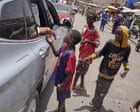
An old west African practice of sending children away to study is being used as a cover for trafficking, say human rights groups
In a bare, gloomy room on the beachfront at Saint-Louis, in the north-west of Senegal, dozens of young boys sit on a concrete floor chanting verses from the Qur’an, surrounded by fishing boats and piles of rubbish. It is early in the morning but the children have already been up for hours, not to study but to walk the streets begging for food and money.
Every day, these talibés, or students of the Qur’an, join thousands of other boys, some as young as five, on the streets of the city in search of a piece of baguette, a handful of rice or a few coins. They beg not just to fill their own stomachs but also the pockets of their Qur’anic teachers, or marabouts.
Talibés prepare to study the Qur’an under a marabout, or religious teacher, at a daara, or Qur’anic school, in Saint-Louis