By Nelson Manneh
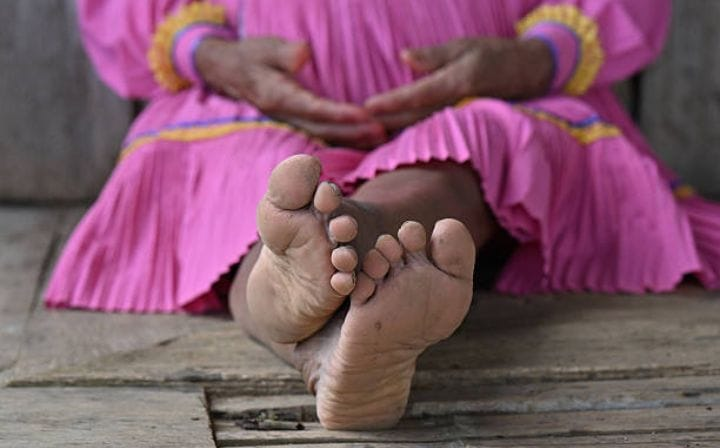
The school uniform was replaced with a wedding dress before she had finished her childhood. At 16, while she was still attending junior secondary school, the teenager from Jarra Soma was married. Years earlier, when she was only three years old, she had undergone Female Genital Mutilation (FGM), a practice carried out on her because it was considered a family tradition. Today, at 17, she said those two experiences continue to shape every part of her life.
“I was cut at the age of three,” she told Foroyaa during an interview.
“My mother said it was a traditional obligation that all females in my tribe are subjected to.”
She said the practice was followed years later by another decision over which she had no control.
“Not stopping there, I was given away in marriage at the age of sixteen when I was still in junior school.”
The teenager said disagreements existed within her own family over the marriage.
“My mother accused my father of forcing me into marriage at that age. She said she was against it, but as the head of the family, my father was the one who decided my fate.”
Less than a year into the marriage, she said she began to face daily challenges. She described a life in which she has little control over decisions affecting her future.
“I want to have control over my own life and move forward,” she said, explaining that she has little say over the circumstances in which she now lives.
Her story reflects the experiences of many girls across The Gambia, where child marriage and Female Genital Mutilation remain closely linked despite laws prohibiting both practices.
Human rights organisations, health professionals and child protection advocates have for years warned that the two practices reinforce one another, limiting girls’ education, exposing them to health risks and reducing their ability to make decisions about their own lives.
Across many communities, FGM is viewed as a cultural rite of passage into womanhood. In some families, it is also regarded as preparation for marriage, making the practice closely connected with early and forced marriage. Although both practices have been outlawed, they continue in parts of the country because of long-standing cultural and social expectations.
The issue has returned to the national spotlight as the legality of the country’s ban on FGM is being challenged before the Supreme Court. The challenge follows failed attempts in 2024 by a member of the National Assembly to repeal the law prohibiting the practice. Supporters of the legal challenge argue that the ban interferes with religious and cultural freedoms, while women’s rights organisations, medical professionals and child protection groups have urged the courts to maintain the prohibition.
Research continues to show that FGM is one of the most common harmful traditional practices affecting girls in The Gambia.
Available studies estimate that approximately 73 per cent of women aged between 15 and 49 have undergone some form of Female Genital Mutilation. Most girls experience the procedure during early childhood, often before they are old enough to understand what is happening. For many families, the decision is driven not by law but by powerful social expectations passed from one generation to another. Girls who are not circumcised may be viewed as unsuitable for marriage or as having failed to fulfil cultural obligations. Health experts, however, continue to warn about the immediate and long-term consequences of the practice. They said survivors may experience severe pain, excessive bleeding, infections, urinary complications and long-term reproductive health problems. Many also face difficulties during childbirth years later.
The legal position on FGM changed in 2015 when The Gambia enacted the Women’s (Amendment) Act, making the practice a criminal offence. The law provides penalties, including fines and prison terms, for individuals who perform or assist in carrying out the procedure. Despite the legislation, enforcement has remained difficult.
Campaigners said many cases now occur in secret as communities attempt to avoid prosecution. The continuing legal debate has also raised concerns among organisations working to eliminate the practice.
Child marriage presents a similar challenge. Although the Children’s (Amendment) Act, passed in 2016, established 18 years as the minimum legal age for marriage, implementation continues to face resistance in communities where traditional customs remain influential. Statistics indicate that more than 40 per cent of Gambian women aged between 20 and 49 were married before reaching the age of 18. A significant number entered marriage before turning 15.
For many girls, leaving school for marriage marks the end of formal education and the beginning of responsibilities they are neither physically nor emotionally prepared to shoulder.
Advocates said the combination of early marriage and FGM often limits educational opportunities, increases health risks and reduces girls’ ability to participate fully in decisions affecting their lives.
For the teenager from Jarra Soma, those consequences are no longer statistics but daily reality. Her education stopped before completion. Her future was decided by others. And today, she said she continues to live with the effects of decisions made when she was still a child.
Across parts of rural Gambia, efforts to end Female Genital Mutilation (FGM) and child marriage are increasingly being driven by communities themselves.
Rather than relying solely on the law, campaigners are engaging village elders, religious leaders, women, youth groups and former circumcisers in discussions about the health risks associated with the practice and the rights of girls.
Supporters of these community-based initiatives said lasting change is more likely to come when communities decide for themselves to abandon the practice instead of feeling that change has been imposed from outside.
Among those who have chosen to break with tradition is Maimuna Jadama, a native of Jarra. For generations, women in her family had performed FGM. When her mother died, she was expected to continue the practice. Instead, she decided to stop.
“When my mother died, I refused to become a circumciser,” she said.
“I did not want to conflict with the law.”
She said discussions with health workers played an important role in changing her views.
“Health workers said the practice is harmful, so I told my community we should stop and protect our children.”
Her decision was not welcomed by everyone. Walking away from a family tradition meant challenging customs that had been passed from one generation to another. In many communities, she explained, mothers have long believed that circumcising their daughters is part of raising them properly.
For decades, girls who underwent the practice were often viewed as respectable, marriageable and worthy of recognition within their communities. According to Jadama, abandoning the practice required challenging deeply held beliefs about womanhood and cultural identity.
“FGM was not just a practice,” she said.
“It was a celebration.”
“Girls were honoured after the cut.”
“But now, it is fading.”
She acknowledged that attitudes are gradually changing in some communities as more people become aware of the health consequences associated with the practice.
Despite that progress, many women continue to live with the long-term physical and emotional effects of FGM. Among them is Awa Gibba, who underwent one of the most severe forms of the practice as a child. Years later, when she married, she said the trauma continued. Gibba recalled that she was forcefully reopened before consummating her marriage.
“They asked me to lie down, and they used a razor blade to reopen me,” she said quietly.
She said she was warned that refusing to have sexual intercourse with her husband immediately afterwards could result in the wound healing again.
“They told me that if I did not sleep with my husband afterwards, the wound might close again and I would have to go through the same procedure once more.”
She described the experience as both physically painful and emotionally humiliating. For many women subjected to severe forms of FGM, she said, the suffering does not end after childhood. Instead, it continues through adolescence, marriage and childbirth. Medical experts have long associated severe forms of FGM with complications during sexual intercourse, menstruation and delivery. Gibba said she experienced those difficulties herself. When she became pregnant with her first child, she said the effects of the procedure became even more apparent. Giving birth was an ordeal she had never anticipated.
“When I gave birth to my first child, it was extremely painful,” she recalled.
She said it was only then that she began to understand that the procedure she underwent as a child had lifelong consequences.
For many years, however, she believed the pain was simply part of being a woman.
“In many communities, women are taught that suffering is part of womanhood,” she said.
“So many endure it in silence.”
Her understanding began to change after attending an awareness programme on FGM.
There, health workers and campaigners discussed both the medical risks associated with the practice and its implications for the rights of women and girls. At first, she remained unconvinced.
“I thought the information was exaggerated,” she said.
“I did not believe it.”
Over time, however, she began reflecting on her own experiences.
She realised that many of the physical problems she had endured over the years were connected to the procedure carried out during her childhood.
“As I reflected on my own experiences, I began to understand the connection,” she said.
Health professionals continue to warn that many survivors face lifelong medical complications.
According to medical evidence cited by campaigners, women who undergo FGM may experience severe bleeding, infections, urinary complications, chronic pain and increased risks during childbirth.
Some require emergency medical interventions during delivery because of complications linked to the procedure. Campaigners said many survivors continue to suffer in silence because discussions surrounding FGM remain sensitive in many communities. Some women are reluctant to speak publicly about their experiences for fear of stigma or criticism.
Others said they only discovered years later that the pain they experienced throughout their lives was directly linked to the procedure they underwent as children.
For campaigners working in rural communities, survivor testimonies have become an important part of public education efforts. They said personal stories often have a greater impact than statistics alone, helping families understand the long-term consequences of practices that have been accepted for generations.
As debates continue in communities and in the courts, survivors like Awa Gibba and former circumcisers such as Maimuna Jadama remain among those sharing their experiences in the hope that future generations of girls will face different choices.
Although Female Genital Mutilation (FGM) has been prohibited by law in The Gambia for more than a decade, the practice continues in some communities, where campaigners said social expectations often carry more influence than legislation.
The practice was criminalised under the Women’s (Amendment) Act, 2015, which introduced penalties, including fines and prison terms of up to three years, for anyone who performs, assists or facilitates the procedure.
Despite the legislation, enforcement has been limited, with relatively few cases reaching the courts. The issue drew national attention in 2023 when three women were convicted for carrying out FGM on infant girls, marking one of the country’s most closely watched prosecutions under the law.
The case reignited public debate over the future of the legislation and the continued prevalence of the practice in some parts of the country. In 2024, some members of the National Assembly sought to repeal the law banning FGM. The proposal generated widespread public debate, drawing strong reactions from women’s rights organisations, health professionals, religious leaders and civil society groups.
After extensive discussions, the attempt to repeal the legislation did not succeed, leaving the 2015 law in force. The legal debate, however, did not end there. Supporters of FGM later turned to the Supreme Court, asking the country’s highest court to determine whether the ban infringes constitutional protections relating to religious and cultural freedoms. The outcome of the case is being closely followed by rights groups, legal practitioners and community leaders across the country. Campaigners said the proceedings could have significant implications for efforts to eliminate the practice.
Beyond national legislation, The Gambia is also party to several international and regional treaties protecting the rights of women, girls and children. These agreements call on states to eliminate harmful traditional practices and protect children from violence, discrimination and abuse.
Health experts continue to warn that FGM has no medical benefits and carries both immediate and long-term health risks. Medical studies have linked the practice to severe bleeding, infections, urinary complications, chronic pain and psychological trauma.
Women who have undergone FGM may also experience complications during pregnancy and childbirth. Research cited by the World Health Organization (WHO) indicates that women who have undergone FGM are more likely to experience obstructed labour, excessive bleeding during delivery and a greater need for emergency caesarean sections.
Globally, the WHO estimates that more than 230 million girls and women are living with the consequences of FGM, with most having undergone the procedure between infancy and the age of 15.
Despite growing awareness of these risks, campaigners said many families continue to support the practice because of long-standing cultural expectations. In many rural communities across The Gambia, FGM remains closely associated with ideas of purity, respectability, cleanliness and preparation for marriage. Families who choose not to circumcise their daughters may face criticism from relatives, neighbours and other members of their communities.
Some report being excluded from social activities or accused of abandoning their traditions. Traditional circumcisers, many of whom inherited the role from parents or relatives, also continue to hold influence in some communities, although several have publicly abandoned the practice in recent years.
Not everyone agrees that FGM should be prohibited. Some supporters argued that efforts to eliminate the practice represent an attack on culture and religion rather than a public health intervention.
One male elder interviewed during the reporting expressed that view.
“They are manipulating us,” he said.
“They want us to abandon our traditions and religion.”
“In my house, all female children must be circumcised.”
For families who decide to reject the practice, the consequences can be deeply personal.
In Wellingara Ba, one mother said refusing to subject her daughters to FGM resulted in the breakdown of her marriage. Protecting her children, she said, came at the cost of losing her home and family.
Campaigners said such experiences demonstrate the intense social pressure faced by parents who challenge long-established customs. Child marriage often follows the same pattern.
Advocates working with women and children said girls who undergo FGM are, in some communities, considered ready for marriage, reinforcing a cycle that limits educational opportunities and exposes them to early pregnancies and increased health risks.
Organisations working at community level said greater public education, stronger enforcement of existing laws and continued dialogue with traditional and religious leaders remain central to efforts aimed at reducing both practices.
Across villages and towns, discussions continue among families, health workers, survivors and community leaders about traditions that have shaped generations of girls.
For some, those traditions remain central to cultural identity. For others, the experiences shared by survivors such as the teenager from Jarra Soma and Awa Gibba illustrate the lasting physical, emotional and social consequences that can follow girls long after childhood.
As the Supreme Court considers the legal challenge to the 2015 ban on Female Genital Mutilation, the debate over culture, religion, health and the rights of women and girls continues both inside courtrooms and within communities across The Gambia.
You need to login to view and post FB Comments!