By Ndey Sowe
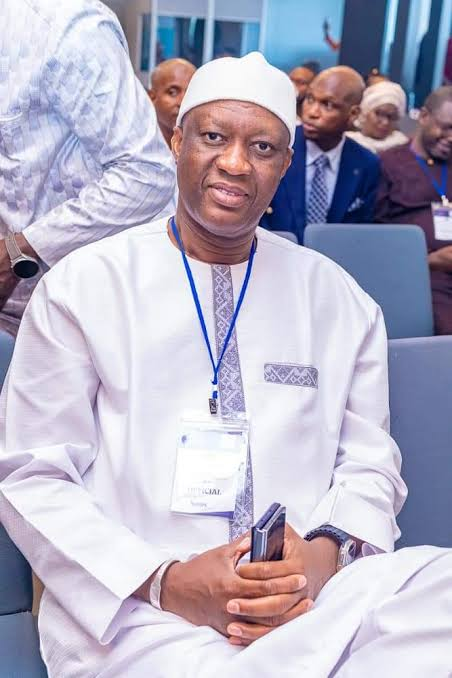
The Commissioner General of the Gambia Revenue Authority (GRA), Yankuba Darboe, has underscored the importance of visionary leadership in advancing tax administration reforms across Africa, stating that while technology modernises institutions, effective leadership is essential to sustaining meaningful change.
He made these remarks on the sidelines of the 7th Heads of Tax Administrations Master Class (HTAMC) held in Banjul, which brought together Commissioners General and Heads of Tax Administrations from across the continent under the auspices of the African Tax Administration Forum (ATAF).
The event was attended by Vice President Muhammed B.S. Jallow, Finance Minister Seedy K.M. Keita, cabinet ministers, ATAF Executive Secretary, members of the GRA Board of Directors, senior management, tax administrators from various African countries, and other distinguished guests.
Mr Darboe described it as a privilege for the country to host Africa’s leading tax administrators, noting that their presence in Banjul reflects the growing importance of tax institutions in supporting the continent’s economic development.
He commended ATAF for establishing the Heads of Tax Administrations Master Class, describing it as one of Africa’s most effective platforms for peer learning, South-South cooperation and the exchange of ideas on tax administration.
According to him, African countries, despite differences in language, legal systems and economic development, continue to face similar challenges in domestic revenue mobilisation. He stressed that the Master Class provides an opportunity for tax leaders to learn from one another and develop practical solutions to these common challenges.
Reflecting on his own experience, the GRA head said participation in previous editions of the Master Class had significantly influenced his leadership journey. He disclosed that several reforms implemented by the Gambia Revenue Authority, including digital innovations, compliance strategies and institutional reforms, were inspired by experiences shared by fellow Commissioners General from across Africa.
He observed that successful tax reforms require more than technological investment, arguing that political commitment is equally critical. Before embarking on major reforms or digital transformation initiatives, he said he ensures that both the Minister of Finance and Economic Affairs and the President fully understand the objectives and expected benefits of the reforms, making it easier to withstand resistance that often accompanies institutional change.
Addressing this year’s theme, “Leading for Greatness: Shaping High Performance Tax Administrations,” the Commissioner General said leadership has become the next frontier in tax administration.
He noted that while African revenue authorities have made considerable progress through digitalisation, improved taxpayer services and strengthened compliance programmes, the long-term success of such reforms ultimately depends on leaders capable of inspiring their workforce, promoting accountability, managing change and building resilient institutions.
He further stated that modern tax administrators must now serve as strategists, reform champions, technology advocates, communicators, negotiators and guardians of institutional integrity, reflecting the increasingly complex demands placed on revenue authorities.
On domestic resource mobilisation, the Commissioner General said African governments are increasingly recognising that sustainable development cannot rely indefinitely on grants, foreign aid or external borrowing. Instead, he argued, lasting development must be financed through efficient domestic revenue collection supported by strong public institutions.
Despite improvements in tax administration across the continent, he noted that Africa’s average tax-to-GDP ratio remains below those of other regions, demonstrating the continent’s significant untapped revenue potential. He urged African tax administrations to continue simplifying tax systems, expanding the tax base, strengthening voluntary compliance, embracing digital technologies, improving taxpayer services and combating illicit financial flows.
According to him, improving revenue collection would not only increase government income but also strengthen public institutions, improve governance and create greater fiscal space for investments in national development.
In a lighter moment, he remarked that tax administrators appreciate the significance of small percentage increases, noting that even a one per cent rise in tax compliance can make a Finance Minister smile, while larger gains can transform government confidence in revenue mobilisation efforts.
He encouraged participants to actively engage throughout the Master Class by sharing experiences and learning from one another to help shape the future of tax administration in Africa.
He concluded by expressing appreciation to ATAF for its continued commitment to strengthening tax administration across the continent and advocating for Africa’s interests in international tax matters. He also thanked the Government of The Gambia, the Ministry of Finance and Economic Affairs, the GRA Board of Directors, management, staff and the organising committee for their support in hosting the continental event.
The 7th Heads of Tax Administrations Master Class is expected to provide African revenue leaders with an opportunity to exchange best practices, strengthen collaboration and develop leadership strategies aimed at enhancing domestic resource mobilisation across the continent.
You need to login to view and post FB Comments!