
By Assan Bah
The Government of The Gambia has begun paying D1.6 million to farmers in Jokadou District, North Bank Region, who were left unpaid after delivering groundnuts through the Kerr Alagie Karu Secco, with officials insisting the state is not responsible for the losses but is intervening to protect farmers.
The payments, which commenced on Monday, are being made through the National Food Security Cooperative (NFSC), formerly the Gambia Groundnut Corporation (GGC), following instructions from the Ministry of Agriculture, Livestock and Food Security.
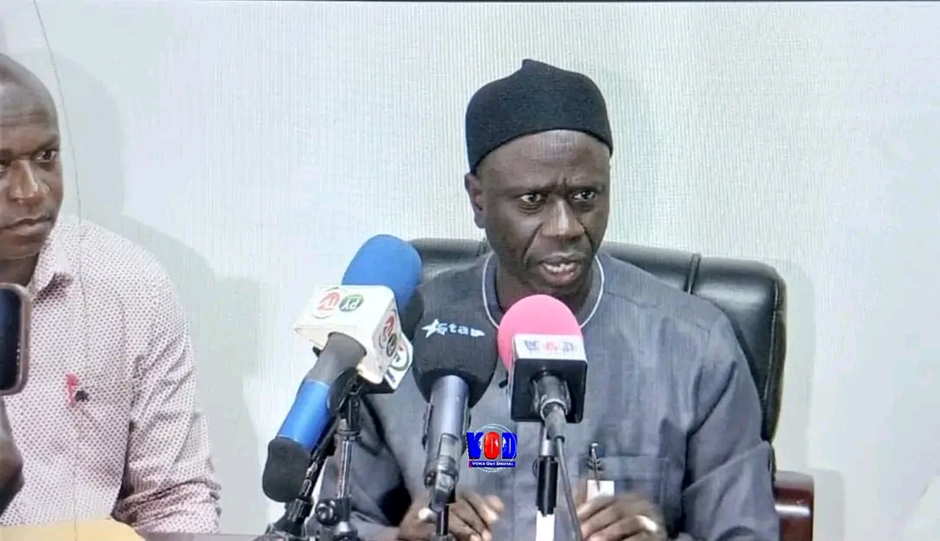
Addressing affected farmers before the exercise began, NFSC Deputy Managing Director Lamin Sanyang apologised for the delays but said the problem stemmed from the management of the Secco rather than the government.
“Even though what happened was caused by your own secco representatives because GGC gave money to the secco presidents to pay all the farmers,” Sanyang said.
He maintained that the government had fulfilled its financial obligations to the Secco.
“The government don’t owe any farmer a single butut. That is the truth,” he said. “I stated that we are apologizing because a farmer who sold his groundnut and couldn’t still get his or her money. It is difficult.”
According to Sanyang, the NFSC provides funds to Seccos once they have delivered 75 per cent of their purchased groundnuts.
He explained that reimbursements are made every three days, making claims of a shortage of funds unjustifiable.
“There was money all the time. Saying there is no money and then owing the farmers is not an excuse,” he said.
Sanyang disclosed that internal investigations uncovered suspicious financial transactions involving some Secco presidents.
“Our investigations have found that some secco presidents were sending money 11 pm to their friends, and family members amounts ranging from 200,000 to 400,000 to one number. How many tons would these amounts have paid?” he asked.
He said the D1.6 million being paid to Jokadou farmers relates to groundnuts that were never delivered to the NFSC.
“The money D1.6 million, we are paying here is not profitable to us. So that’s too significant in terms of tonnage. But the ironic part of this is that we are paying for something that we don’t receive. Because the secco president did not, he received the money, but he did not bring that money back, neither the groundnuts to GGC. GGC or the government never receive it. It is loss to the government. We are paying you only because of the instruction of the government,” Sanyang said.
He explained that agreements signed with Secco presidents expressly prohibit the purchase of groundnuts on credit.
According to him, the Kerr Alagie Karu Secco ignored that provision, resulting in farmers not receiving payment while the cooperative also failed to receive the produce.
Sanyang warned farmers to exercise greater caution in selecting the Seccos they do business with, saying government intervention in such circumstances would not become routine.
“You all need to be mindful of the seccos you deal with because this will be last time we going to pay farmers what we have not receive,” he said. “You have seen how you suffered before the government took a decision. This shouldn’t repeat.”
He also rejected claims by the Secco president that funds had not been received from the NFSC.
“The secco president was claiming that he did not receive the money, which was not true. Don’t allow any secco president to mislead you, saying there is no money. Because the money is always available for you to be paid instantly when you take your groundnuts to the secco. They are doing that on their own interest,” he said.
Asked whether farmers from other affected areas would also be compensated, Sanyang said Monday’s payments were limited to Jokadou but indicated that similar cases were expected in the Lower River Region. He advised affected farmers to formally report such cases to the police and the regional governor so that investigations could proceed.
“They have to go report it to an authority: the police and the governor to ensure that they are arrested and caution and put in statements. So that if we are going to pay, we take them to court. Because this money must be recovered,” he said.
According to Sanyang, the remaining unpaid claims across the country are estimated at between D900,000 and D1 million. He said the NFSC would strengthen its monitoring systems to prevent similar incidents in future. Sanyang noted that the situation had improved significantly compared with the previous year, when the government paid almost D25 million to farmers for produce that was never delivered to the corporation.
“This year, it has declined. So we are still going to re-engineer and put in strict measures to ensure that this thing will not happen,” he said.
He revealed that several Seccos had already been suspended after the cooperative detected large transfers to private telephone numbers outside operating hours.
“This is why some of them were stopped immediately when we saw it. It doesn’t make sense. At that time, the secco is not operating. So where is that money going to?” he asked.
“We have a system in place. We are going to improve on that system. Maybe this year, it’s only a few seccos. Next year, we expect to be zero. Last year, we paid almost 25 million. So because of the control. And of course, the contract has highlighted a lot of strict measures to be taken.”
On the status of the police investigations, Sanyang declined to provide details but confirmed that inquiries were progressing.
“I cannot talk much about the police investigation, but I know they are doing it. Currently, we understand they are very far. For this particular one, we understand because we are trying to recover some documents,” he said.
He added that all Secco presidents found to have defaulted would face prosecution and disclosed that the case involving the Kerr Alagie Karu Secco had already been submitted to the Attorney General’s Chambers and the Ministry of Justice.
Reiterating the government’s position, Sanyang insisted that the state had settled all payments due to farmers.
“It’s very clear from the onset. GGC does not owe anybody any butut. The government don’t owe anybody a butut. Any farmer for that matter,” he said.
When contacted by Foroyaa, Jim Gaye, President of the Kerr Alagie Karu Secco, denied mismanaging either government funds or farmers’ money. He maintained that the problem arose from discrepancies at the depot.
Speaking after receiving payment, Hamad Bah, who led a group of affected farmers from Toro Alasan, expressed relief and said almost all the affected farmers had now been paid.
“We have all been paid except two of our colleagues because their names were found on the PP book but they have been advised to go to the secco clerk,” he said.
Bah also credited sustained media coverage for drawing attention to the matter.
“After thanking Allah. We would thank the media particularly Foroyaa because we would have been paid without your continuous reporting of the matter,” he said.
He added that the affected farmers had initially reported the matter to the district chief, who referred it to the regional governor, before filing a complaint with the police, who subsequently opened an investigation.
You need to login to view and post FB Comments!