
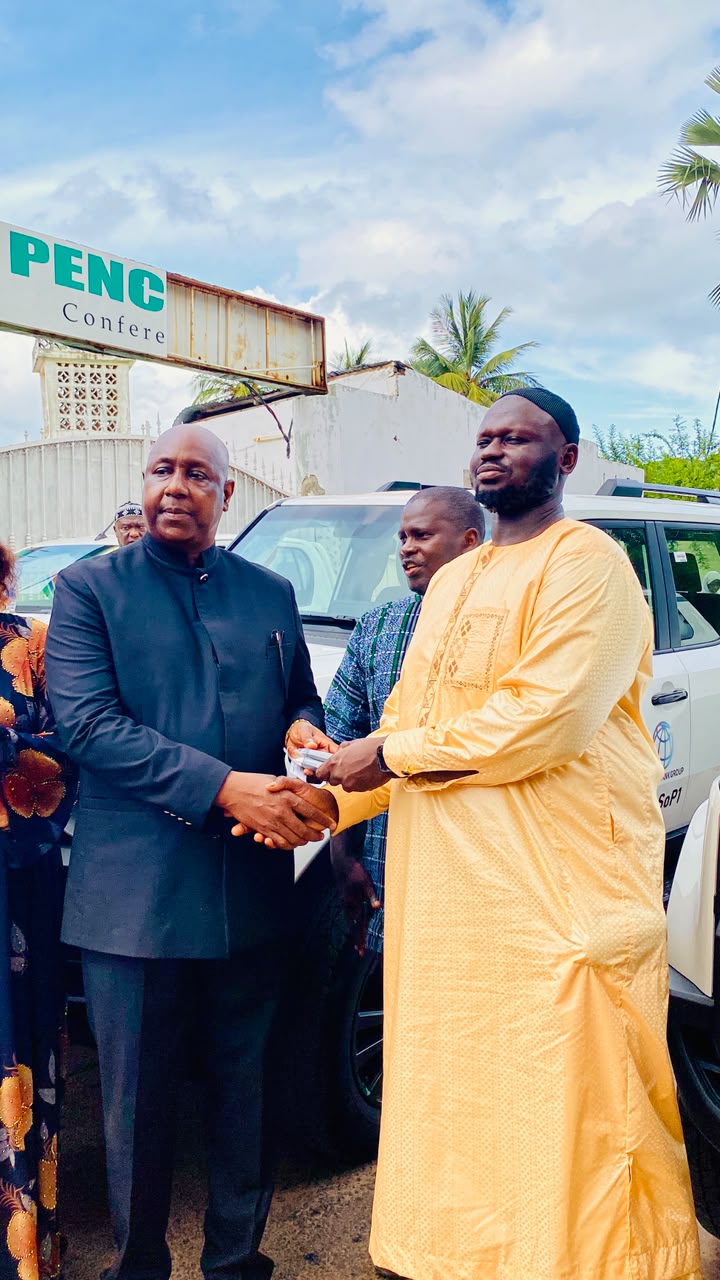
The Minister of Agriculture, Livestock and Food Security, Dr. Demba Sabally, has called on enumerators to demonstrate professionalism, honesty, and integrity as they begin fieldwork for the 2026 National Agriculture Census.
Speaking at the closing ceremony of a two-week training programme held from 13 to 24 July at Paradise Hotel, Dr. Sabally congratulated the participants on successfully completing the training and reminded them that they are the frontline representatives of one of the country’s most important national exercises.
He urged the enumerators to treat every farming household with respect and ensure that the information they collect is accurate and reliable.
Dr. Sabally described the National Agriculture Census as a critical exercise that will provide the government with reliable data to guide agricultural planning, strengthen food security, attract investment, and support evidence-based policymaking.
He said the census will also help assess the impact of major government and donor-funded agricultural programmes, including the Resilience of Organizations for Transformative Smallholder Agriculture (ROOTS), REWARD, GIRAV, GAFSP, SRPEP, and the Rural Value Chain Development Project (RRVCDP). The findings, he added, will help shape future interventions aimed at improving the livelihoods of farmers, empowering women and young people, and increasing agricultural productivity.
The minister thanked the trainers, facilitators, the Gambia Bureau of Statistics, the Food and Agriculture Organization (FAO), the World Bank, and other development partners for their technical and financial support in making the training successful.
Reaffirming the government’s commitment to agricultural transformation, Dr. Sabally said the census will contribute to President Adama Barrow’s vision of building a food-secure nation, reducing dependence on food imports, strengthening rural livelihoods, and improving resilience to climate change.
The two-week training prepared enumerators with the knowledge and skills required to conduct the nationwide census, which is expected to generate reliable data to support future agricultural policies and development planning in The Gambia.