
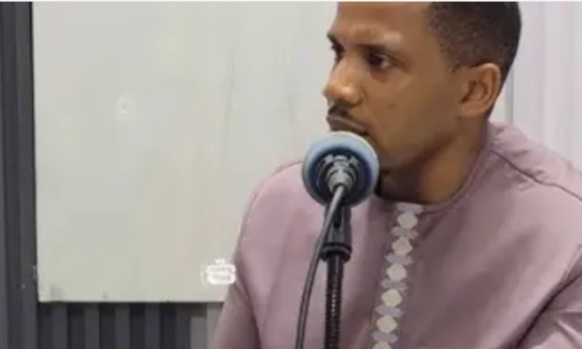
Information Minister Dr. Ismaila Ceesay says he is uncertain what to believe regarding the controversy surrounding journalist Omar P. Jallow, citing what he described as conflicting accounts given by Jallow over the circumstances leading to his reassignment and resignation.
Speaking during an appearance on Coffee Time with Peter Gomez, Dr. Ceesay said he personally contacted Jallow after reports surfaced on social media alleging that his passport had been confiscated and that he had been interrogated by the State Intelligence Services (SIS).
According to the minister, Jallow denied those claims during their communication and instead offered a different explanation of events.
“I have heard two stories. I don’t know which to believe,” Dr. Ceesay said.
He explained that Jallow had earlier informed him that his passport had not been confiscated, but had been submitted for visa processing ahead of an official trip involving the Office of the Vice President.
Dr. Ceesay also said Jallow had denied being questioned by the SIS.
The minister said that based on that account, he considered the matter clarified and did not pursue it further, describing staffing decisions as operational matters outside his direct mandate.
However, Dr. Ceesay said he was later surprised when Jallow publicly presented a different version of events.
“That left me flabbergasted,” he said.
The controversy follows Jallow’s reassignment from the Office of the Vice President back to Gambia Radio and Television Services (GRTS), after which he resigned.
During the interview, host Peter Gomez repeatedly questioned whether the circumstances suggested political pressure or unfair treatment.
Dr. Ceesay rejected those claims, insisting the government does not punish public officials because of political beliefs or affiliations.
“It is not a vindictive government,” he said.
He added that while civil servants are expected under General Orders to avoid openly partisan political activity, he was not making any direct accusation against Jallow.
The matter has sparked public discussion over freedom of association, the treatment of civil servants, and transparency in government decision-making.




References:
Hollywood casino maryland https://junaidzzff923930.ltfblog.com/39989990/casino-of-gold-dein-ultimativer-guide
References:
Tuscany casino https://favpress.site/